The agent workshop
I got tired of building AI agents in a form. So I built a room you can walk into, where an agent is assembled one part at a time — and every part means something.
The problem with the form
Every agent platform asks you the same thing: fill in a name, paste a system prompt, tick some tools, pick a model, hit Create. It works. It is also completely opaque.
Nothing in that form tells you what an agent is. You cannot see which parts are load-bearing. You cannot see that one field is the whole personality and another is decoration. A junior teammate fills it in, and you have no idea whether they understood the machine or just filled in boxes.
So I stopped filling forms and built a workshop.
An agent is a body
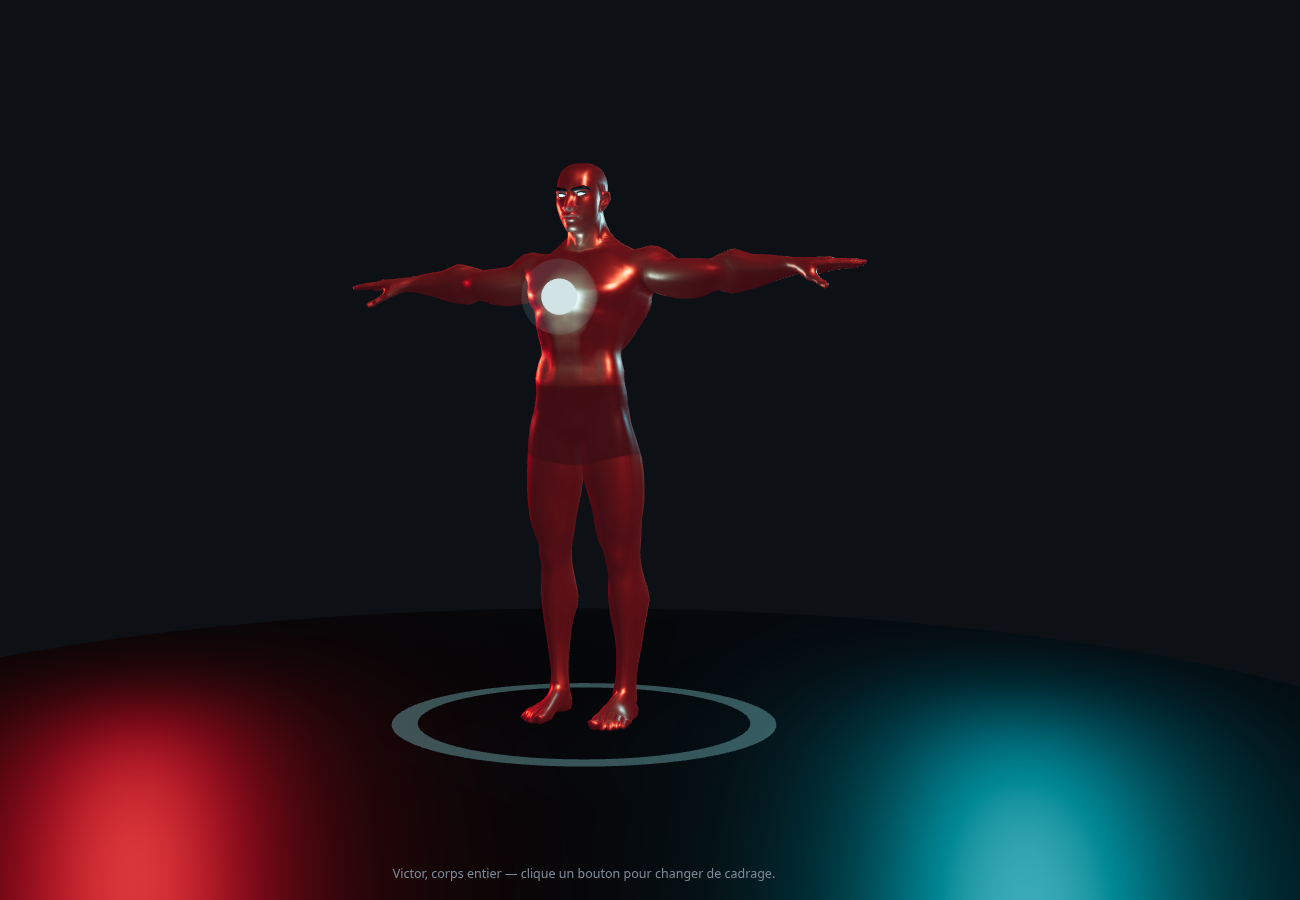
The core idea is one sentence: an agent is not a record, it is a body. And a body comes apart.
Every part of the animal maps to something real in the agent's definition. Not as a metaphor you have to squint at — as a one-to-one mapping:
| Part | What it actually is |
|---|---|
| Back legs | The living map, and the ability to walk around in it. Where the agent can go. |
| Hips | Its job. The thing that pushes it forward. |
| Chest | What it does, and what it refuses to do. |
| Left front leg | One tool. |
| Right front leg | Another tool. |
| Head | The brain — its model. It plugs in last. |
| Tail | Its mood: happy, alert, on guard. |
The head goes on last, and that is the whole point
Watch the order. The brain is the last part you attach.
That ordering is not an aesthetic choice — it is an argument. Most people build agents brain-first: pick the model, then figure out what to do with it. The workshop makes that physically impossible. You have to define where the agent can go, what its job is, what it refuses, and what tools it holds. Only then do you give it something to think with.
An agent that can only say yes is not an agent. It is a pipe.
Notice that the chest carries two things: what it does and what it refuses. In my experience the refusal field is worth more than the capability field. It is the one that stops an agent from wandering into its neighbour's work. Most platforms do not have that field at all.
What building the workshop taught me — and it was not what I expected
Drawing an agent as a body forced a question a form never asks: what is actually attached to what? So I went to look. My control tower has 271 tools registered. Every single one of them is attached to zero agents. The tools exist as a list. The link between a tool and the hand that holds it does not exist. Same for my guardrails: 32 of them, none of them actually mounted on a gate. They are written, and they guard nothing. I had been running that system for months. The spreadsheet never told me. The moment I tried to draw the hands, the hands were empty.
Why a picture finds bugs a table cannot
This is the part I would like other people to steal.
A table can hold an incoherent system indefinitely. Rows do not have to fit together. A drawing cannot: if you try to draw the agent holding its tools and there is no field linking a tool to an agent, you are stuck, and you have found a real structural hole in about four seconds.
It is the same reason network engineers learn on Packet Tracer instead of reading routing tables. Watching a packet get dropped teaches you more than reading status: DROPPED in row 4,812.
An open invitation — to Google, and to anyone else building an agent platform
Google's Gemini Enterprise Agent Platform says it lets teams build, scale, govern and optimize enterprise agents. I have read that page carefully. It is a serious platform and I am not competing with it — I cannot build BigQuery.
But there is a hole in it, and it is the same hole every agent platform has: everything is invisible. Governance is a registry and a policy file. Tools are a list. Refusals are a status code. There is not one screen on which you can see an agent's shape, or watch a gate say no.
So here is the proposal, plainly:
Build the workshop.
Not a diagram generator. A place. One screen where a new agent is assembled part by part, where each part is a real field, where the model attaches last, and where an unattached tool is visibly a hand holding nothing.
Three reasons it is worth someone's quarter:
1. It teaches the mental model for free. Onboarding a team onto an agent platform is mostly teaching people what the fields mean. A body teaches that in ten seconds and never needs a doc.
2. It surfaces structural bugs that dashboards hide. My 271-tools-attached-to-nothing was invisible in every table and obvious in the first drawing. That failure mode is not unique to me. Any customer with a large agent estate has a version of it right now.
3. Refusals become the product, not the error log. The moment refusal is a visible part of the body rather than a status field, teams start writing good refusals. That is governance that actually happens, instead of governance that is documented.
I built mine with a hobbyist 3D toolchain, alone, on a machine under my desk. It is rough. That is rather the point: if one person can get this far on evenings, a platform team can do it properly.
The parts are separate files. The mapping is seven lines. Take the idea — I am not precious about it. I would rather this existed inside a real platform than stayed a curiosity in my workshop.
The specific ask, so this is not just an opinion
Two things, both cheap, and I will do the work: One — run the audit on your own estate. Take any customer with more than fifty registered agents and ask a single question: how many registered tools are attached to zero agents? I will bet the number is not zero. If it is zero, I am wrong in public and you have lost ten minutes. If it is not, you have found a metric worth shipping, and it took one query. Two — let me build the prototype against your platform. Seven parts, mapped to the Agent Platform's own agent definition, running in a browser against a real project. I will build it in the open and publish whatever it finds, including the parts that make my idea look bad. All I need is a documented way to read and write an agent definition, and someone to tell me when the mapping is wrong. Neither of these asks for money or a meeting. The first is a query. The second is me doing the work.
Built on top of a control tower where a team of agents works behind gates that are allowed to say no. The window into that tower is Agent Tracer, a single HTML file that plays your agents' conversation and paints every refusal red — live demo.